
Gyeongju: Cheomseongdae, Daereungwon and where to see Cheonmachong’s finds
To explore both Silla astronomy and tomb construction in Gyeongju, pair Cheomseongdae with Cheonmachong inside Daereungwon. See the tomb’s structure there and consider Gyeongju National Museum for the excavated finds, as the source suggests; its current displays need separate confirmation.
Introduction
The Korea Tourism Organization's open-tourism information introduces Cheomseongdae as a landmark of Gyeongju and the oldest observatory in the world.
Suggested route
A suggested order is Cheomseongdae → Cheonmachong inside Daereungwon. Daereungwon and Cheonmachong are not two separate destinations: one is the tomb complex and the other a publicly accessible tomb within it. Compare the stone structure at Cheomseongdae with tomb construction at Cheonmachong. Gyeongju National Museum is an optional additional visit for those interested in the finds, not a fixed stop before its current displays and visiting conditions are checked. The walking route, distance and travel time between the sites have not been verified; check entrances and a map before choosing the order.
Stop 1: Cheomseongdae, a sky observatory built of stone
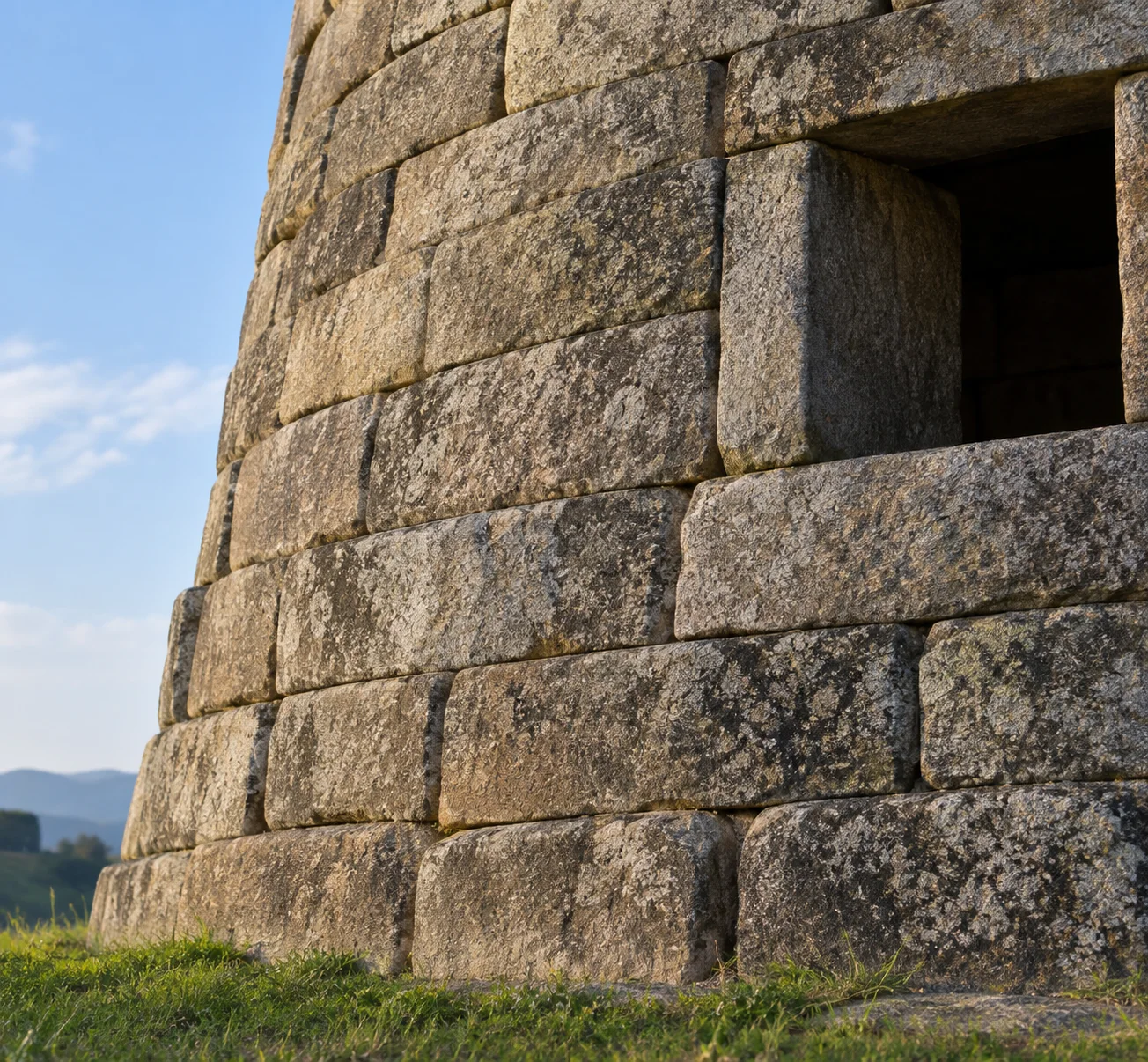
The description says Cheomseongdae is presumed to have been built under Silla's 27th ruler, Queen Seondeok. A bottle-shaped cylinder rests on a base, topped by a 井-shaped summit; it is about 9 m tall, and the cylinder is built of 27 courses of fan-shaped stones. The address is 140-25 Cheomseong-ro, Gyeongju-si, Gyeongsangbuk-do.
Around the window facing southeast, the lower part is filled with rubble while the upper part is hollow. The commentary suggests that observers placed a ladder outside, entered through the window, and climbed to the top with an inner ladder to watch the sky. It also introduces interpretations that about 365 stones stand for the days of a year and that the 27 courses stand for Seondeok; since these are the explanation of the guide text, compare them with the window position and the curve on site. The National Heritage Portal classifies Cheomseongdae as a National Treasure from the Silla period, designated on 20 December 1962, located at 839-1 Inwang-dong.
Stop 2: Daereungwon, a forest city made of tombs
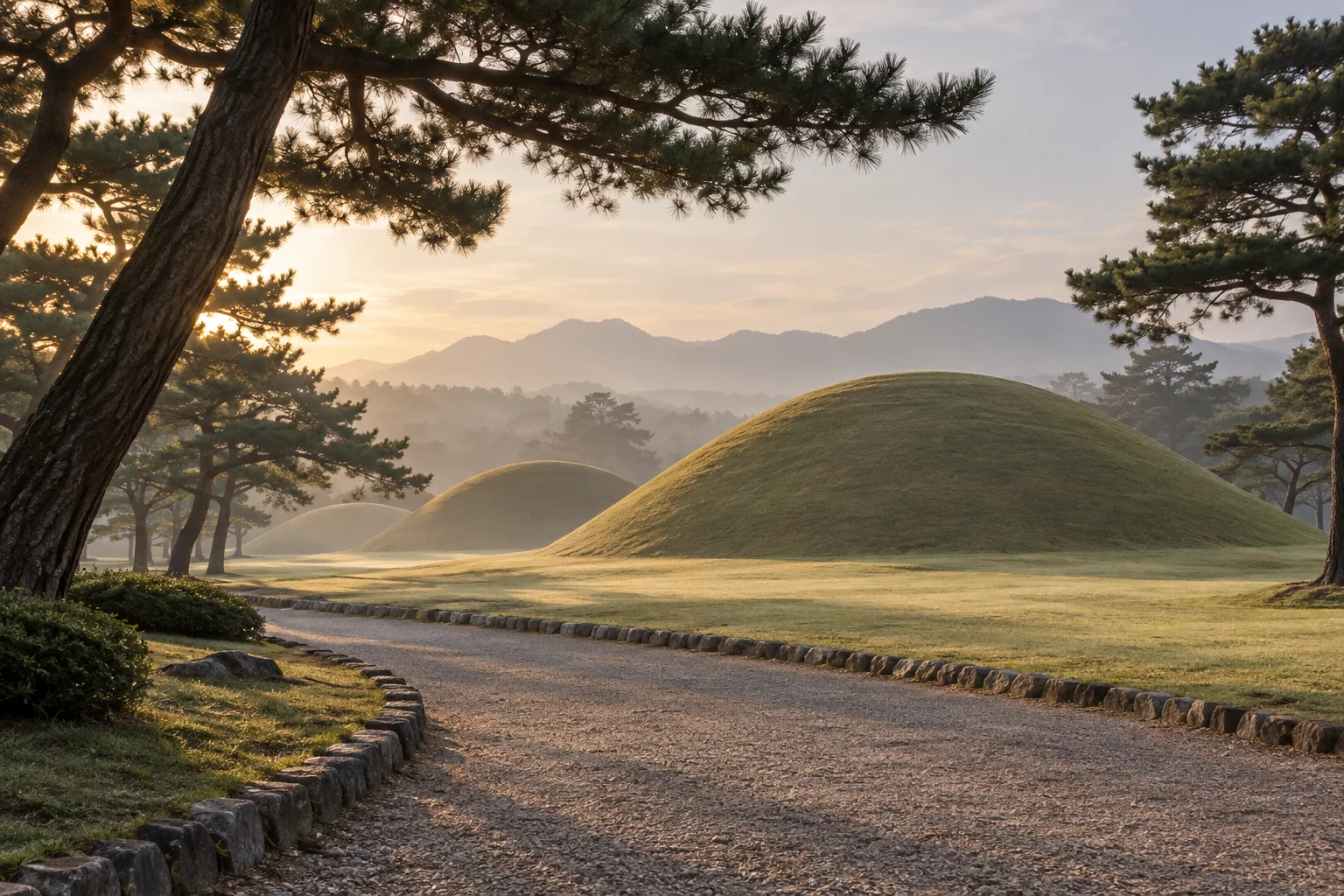
The address of Daereungwon is 9 Gyerim-ro, Gyeongju-si, Gyeongsangbuk-do. The Korea Tourism Organization information explains that Cheonmachong is inside Daereungwon and gives separate hours for the main gate and for the rear gate and Cheonmachong. What stands out in the tourist information is accessibility. It states that a ramp is installed at the Cheonmachong entrance, one wheelchair can be borrowed free of charge, and strollers can be rented at the Daereungwon entrance.
Among the tomb group of Daereungwon, Cheonmachong is said to be the only tomb open to the public. The other mounds are viewed from outside like ridgelines, so it suits the place to slow down and follow the big round lines and the scenery the trees create. As you walk, recall the story of the sky read at Cheomseongdae and compare another face of the same capital.
Stop 3: Cheonmachong, reading Silla inside a tomb
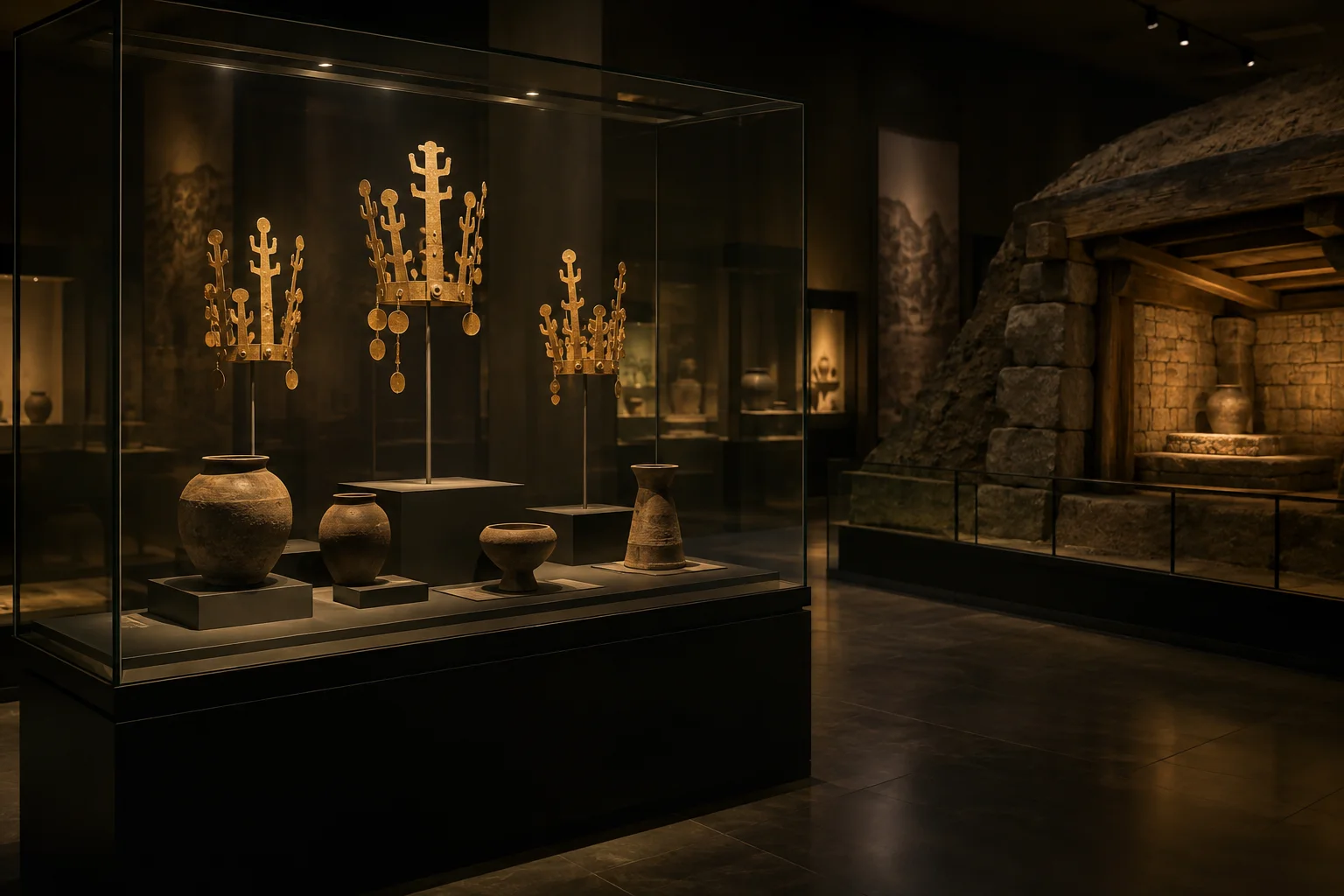
Cheonmachong is a pre-unification Silla tomb presumed to have been built between the late 5th and early 6th centuries. It was excavated in 1973, is of the distinctive Silla stone-mounded wooden-chamber tomb type, and is introduced as 12.7 m high and 50 m in diameter. Inside the earthen mound there is a layer of stones from a stream, and within it a wooden chamber 6.5 m long, 4.2 m wide and 2.1 m high holding a wooden coffin.
The excavated relics total 11,526 pieces, including a gold crown, a gold cap, bird-wing-shaped crown ornaments, a gold belt and gilt-bronze shoes. The tomb's name comes from the 「Cheonmado (Heavenly Horse Painting)」, a mud flap painted with a flying horse on birch bark, described as the first painting excavated from a Korean tomb.
The source names Gyeongju National Museum as their exhibition venue. Plan the tomb structure and the finds as separate visits; this does not guarantee that any particular object is currently on display.
Planning notes
According to the Korea Tourism Organization, Cheomseongdae is open year-round, 09:00 to 22:00 in summer and 09:00 to 21:00 in winter. Daereungwon is open year-round; the main gate is open 09:00 to 22:00 (last entry 21:30), and the rear gate and Cheonmachong 09:00 to 21:30. The dates that separate summer from winter and the admission fee for Cheonmachong are not in the material checked this time, so confirm them again through official channels such as the Gyeongju cultural tourism website. The approach to the Cheomseongdae entrance is described as step-free and accessible by wheelchair.
Closing
The painting that gave Cheonmachong its name and the way the tomb was built offer different points of interest. Focus on the tomb for its construction, or expand the plan after checking the museum’s current displays if the finds interest you.
Questions before visiting
Can you enter every tomb in Daereungwon?
The source identifies only Cheonmachong as open to the public. View the other mounds from outside and focus on Cheonmachong if tomb construction interests you.
Where should you look for Cheonmachong’s excavated finds?
The source names Gyeongju National Museum as their exhibition venue. Plan the tomb structure and the finds as separate visits; this does not guarantee that any particular object is currently on display.
Are the meanings of Cheomseongdae’s stone counts certain?
The symbolism attached to roughly 365 stones and 27 courses is an interpretation in the cited tourism guide. Distinguish it from the physical structure rather than treating it as an established scholarly conclusion.