
Gangneung: architecture, family art and local history at Ojukheon and its museums
Visit Ojukheon House for architecture, Yulgok Memorial Hall for the family’s works, and Gangneung Municipal Museum for local history: the three places serve different purposes within one complex. If indoor exhibitions matter to your plan, note that only Ojukheon House opens on 1 January, Seollal and Chuseok.
Introduction
Ojukheon House / Gangneung Municipal Museum at 24 Yulgok-ro 3139beon-gil gathers early Joseon architecture, belongings of Shin Saimdang and Yi I (Yulgok), and local history from prehistory to the modern era in a single compound. This article picks three places inside it and suggests a slow way to read them.
Suggested route
We recommend starting at Ojukheon House, passing through Yulgok Memorial Hall, and ending at Gangneung Municipal Museum. The flow begins with a house, moves to the writing and paintings of the family who grew up there, and finally widens to the history of the whole city. The Gangneung city guide map marks all three places. Check the entrances and walking path on a map on the day of your visit and adjust the order.
Stop 1: Ojukheon House, the house named for black bamboo
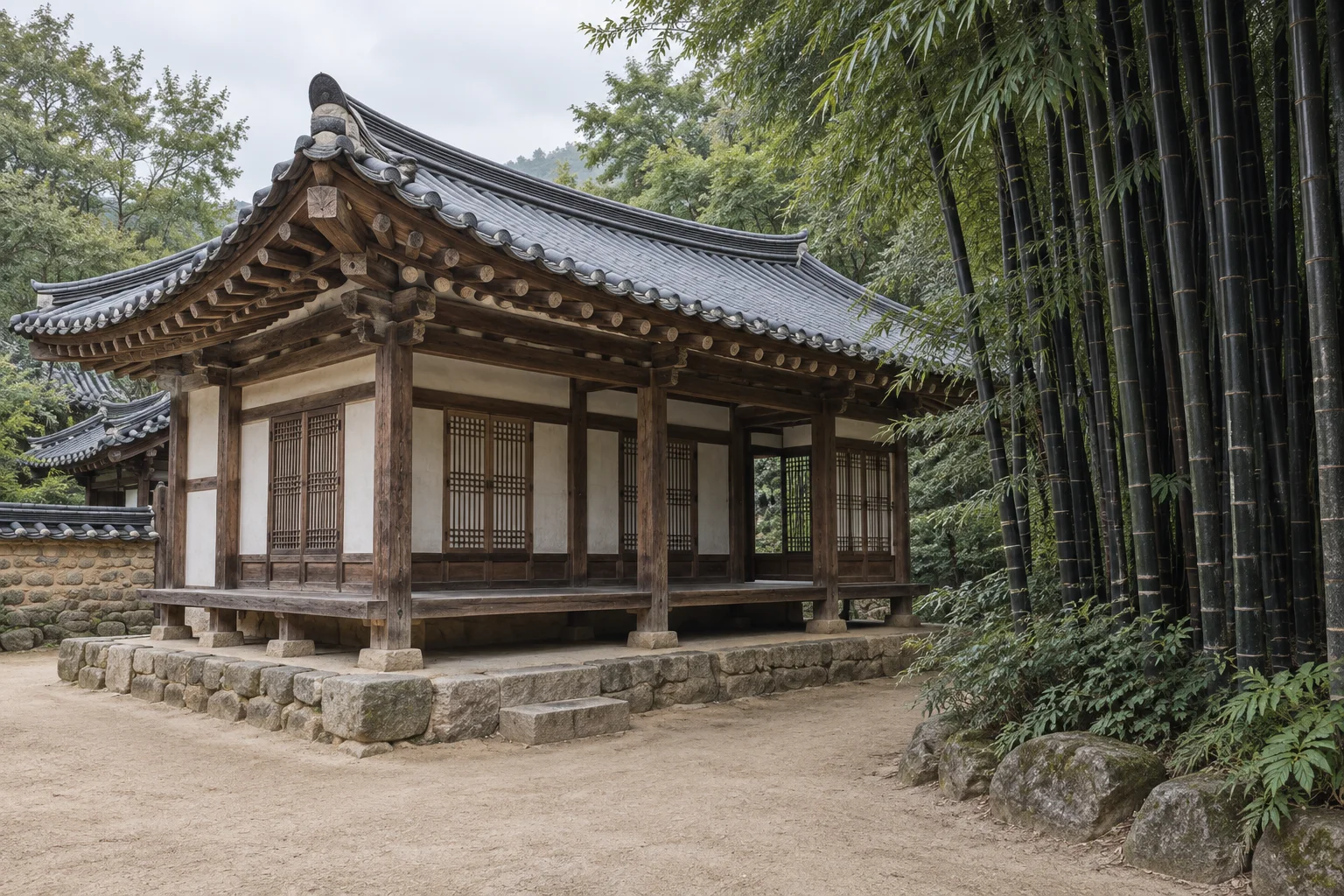
According to the Gangneung city description, Ojukheon House was originally the home of Choe Eung-hyeon (Sujae) and passed through Yi Sa-on and his daughter Lady Yi of the Yongin clan. When she divided her property, Lady Yi of the Yongin clan gave her grandson Yi I a tile-roofed house and fields in Sujinbang, Seoul, and gave Gwon Cheo-gyun the tile-roofed Ojukheon house and fields. Seeing black bamboo thriving around the house, Gwon Cheo-gyun took Ojukheon (烏竹軒) as his pen name, and that name later became the name of the house.
The building is a detached pavilion of an early Joseon private house. Its plan is three bays at the front and two at the side, with a four-bay main hall, a two-bay room and a wooden floor; its two-tier bracket system (iikgong) resembles column-top brackets (jusimpo) and illustrates the transition toward wing-shaped brackets (ikgong). It contains the Mongryongsil room, where Yi I (Yulgok) was born, and it was designated Treasure No. 165 on 21 January 1963. In front of the building, take time to look at how the main hall and the lattice doors connect.
Stop 2: Yulgok Memorial Hall, a family read through brush strokes
After the memorial hall built in 1965 was demolished and rebuilt repeatedly, Yulgok Memorial Hall was reconstructed and reopened on 21 October 2012. Gangneung city explains that the hall displays works by Shin Saimdang, Yi I (Yulgok), Yi U (Oksan), Yi Maechang and Hwang Gi-ro (Gosan), together with materials on Yi U's descendants, combining items held by Ojukheon House with those donated by Bank of Korea governor Rhee Chang-yong.
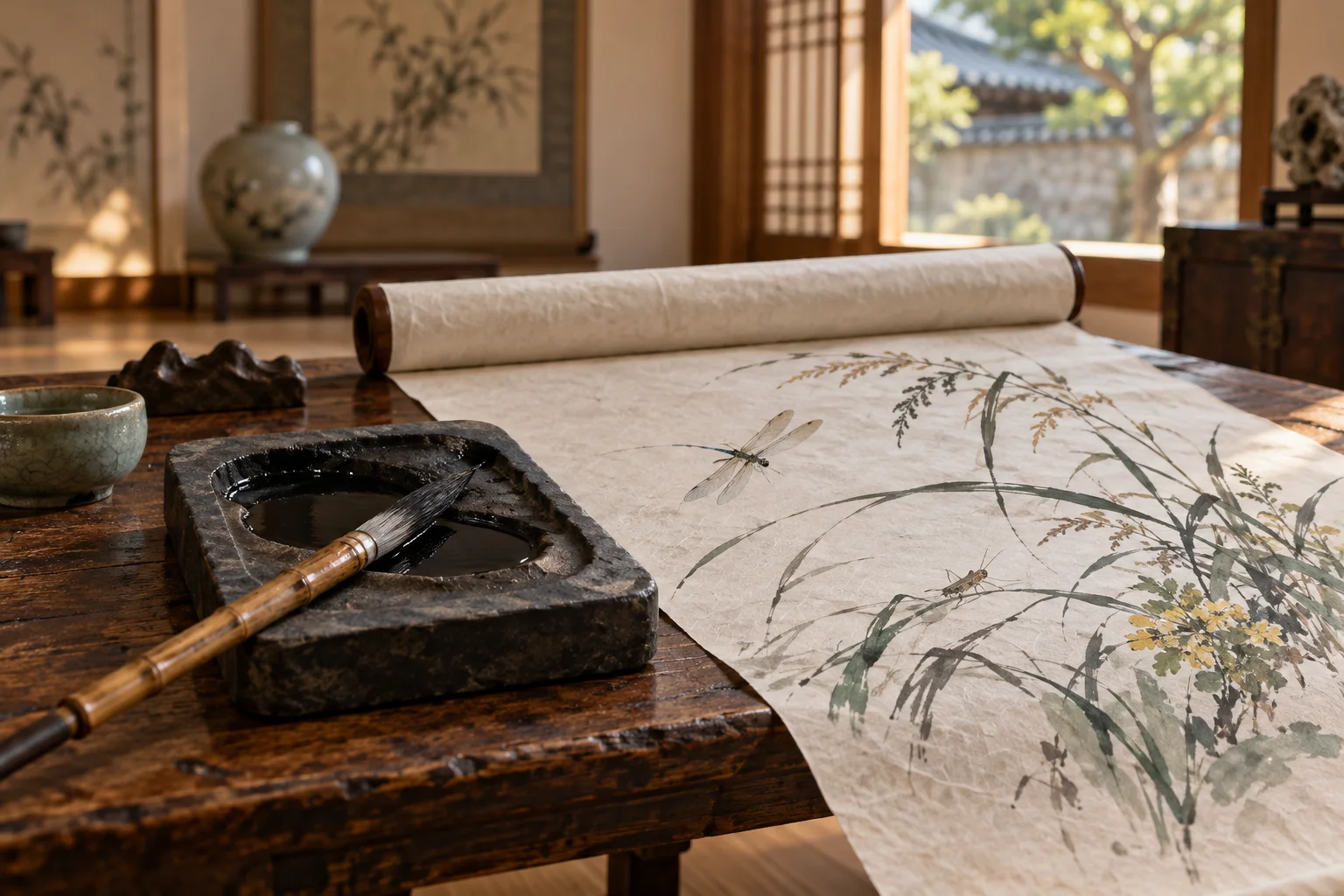
Works by Saimdang listed include a color painting, [Plants and Insects], ink paintings and calligraphy in [cursive script] and [seal script]; relics of Yi I include 『Yi I’s handwritten Gyeokmong yogyeol』 and an [inkstone] inscribed with the royal writing of King Jeongjo after he viewed it. With Maechang's [Sparrow] and [Plum Blossoms in Ink] and Yi U's paintings and calligraphy, there is pleasure in comparing the different brushwork left by one family. Which works are on view now, however, should be confirmed through official notices before you go.
Stop 3: Gangneung Municipal Museum, from prehistory to the Dano festival
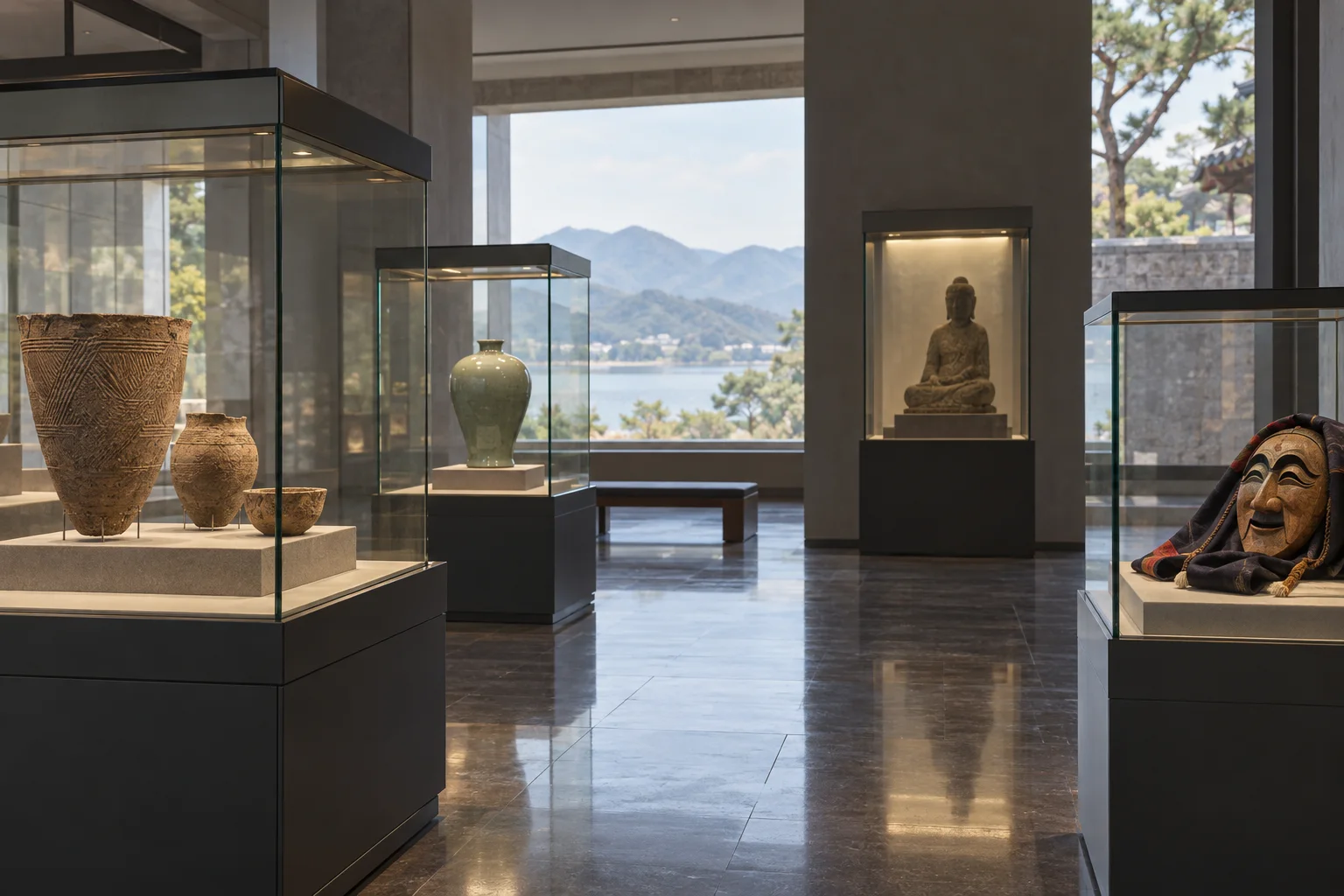
Gangneung Municipal Museum is an exhibition hall that surveys the history and culture of Gangneung and the Yeongdong region from prehistory to the modern era, organized around themes such as prehistoric culture, Buddhist culture, literati, Eight Scenic Views of Gwandong and Geumgangsan, and the Gangneung Dano festival. The Buddhist culture display introduces heritage from Unified Silla to Goryeo together with the treasure 「Seated Stone Bodhisattva from the Hansongsa Temple Site in Gangneung」.
The literati display introduces Kim Si-seup's 『Maewoldang’s collected poems』, Heo Nanseolheon's 『Nanseolheon’s collected works』 and Heo Gyun's 『The Tale of Hong Gildong』, followed by materials on the government office complex (Gangneung Daedohobu), the three-entrance gate (Imyeonggwan), the Confucian school (Gangneung Hyanggyo) and the Gangneung Dano festival. The Currency Exhibition Hall (Gangneung) in the same compound opened in 2023, displays 928 pieces of currency and retells the stories of Shin Saimdang and Yi I (Yulgok) through media art and automata, so it is worth adding if time remains.
Planning notes
According to the city's visitor information, admission is 09:00 to 17:00 (no entry afterward), viewing hours are 09:00 to 18:00, and it is open year-round. On 1 January, Seollal (Lunar New Year) and Chuseok (harvest festival) only Ojukheon House is open and the indoor exhibition rooms are closed. The individual adult fee for Ojukheon House / Gangneung Municipal Museum is 3,000 won, parking is free, and when it is full you are asked to use the lot in front of Nongak Training Center (Gangneung) nearby. Wheeled shoes, kick scooters and bicycles cannot be brought in, and pets cannot accompany visitors. Cultural guide tours can be reserved online only. Times and fees may change, so check again before you leave.
Start with the map and entry deadline
On the city map, Ojukheon House is number 8, Yulgok Memorial Hall 12 and Gangneung Municipal Museum 17. These numbers identify places, not a compulsory visiting order. The actual walking route and duration have not been verified; adjust your order to the entrances and on-site guidance.
Distinguish the 18:00 viewing close from the 17:00 entry deadline. No entry is allowed after 17:00, so do not plan a late-afternoon arrival around closing time alone. If a particular work is your priority, confirm its display first; do not schedule indoor exhibitions on 1 January or the days of Seollal and Chuseok.
Questions before visiting
How do Ojukheon House and Yulgok Memorial Hall differ?
Ojukheon House offers early Joseon architecture and Yi I’s birthplace, while Yulgok Memorial Hall presents family works and belongings. Prioritize the former for architecture or the latter for painting and calligraphy, but confirm any particular work’s current display separately.
Are the indoor rooms at Ojukheon House / Gangneung Municipal Museum open on holidays?
The recorded visitor guide says only Ojukheon House opens on 1 January and on the days of Seollal and Chuseok; indoor exhibition rooms close. Being open year-round does not mean every exhibition room opens every day.
Can cultural guide tours at Ojukheon House / Gangneung Municipal Museum be booked by phone?
The recorded guide instructions specify online booking only, not telephone booking. This condition concerns guided tours and does not mean that all general admission requires a reservation.