
Tongyeong’s Sebyeonggwan Hall and Dongpirang: a surviving building and a saved village
Visit Sebyeonggwan Hall and Dongpirang together to compare two different histories of survival in Tongyeong. The hall remained after most naval headquarters buildings disappeared, while Dongpirang was preserved except for three hilltop houses after the 2007 mural movement.
The name Tongyeong comes from an abbreviated name for Tongjeyeong Naval Headquarters. Once you know that the city's name began with a military headquarters, the Tongyeong landscape that stretches up the hill behind the harbor reads differently. This route ties together Sebyeonggwan Hall, the place where the name began, and Dongpirang, a hillside village that came back to life through murals when it faced demolition plans, in one itinerary. It lets you see the weight of a naval city and the vitality of its alleys side by side on the same day.
Suggested route
Sebyeonggwan Hall and the headquarters site → Dongpirang’s lanes → Dongporu is an editorial suggestion for comparing their histories, not a verified walking itinerary. Dongporu occupies the village’s highest point and is an optional final stop. If hillside walking is a concern, consider leaving it out or visiting fewer places. Choosing only the hall does not guarantee step-free access either. The listed entrance step and lack of wheelchair rental or an accessible elevator at Dongpirang do not establish accessibility along the whole route. If you need mobility support, check entrances, stairs and alternative paths for each section first. Distances, travel times, gradients and accessible detours remain unverified.
1. Sebyeonggwan Hall: The Central Building of the Naval Command
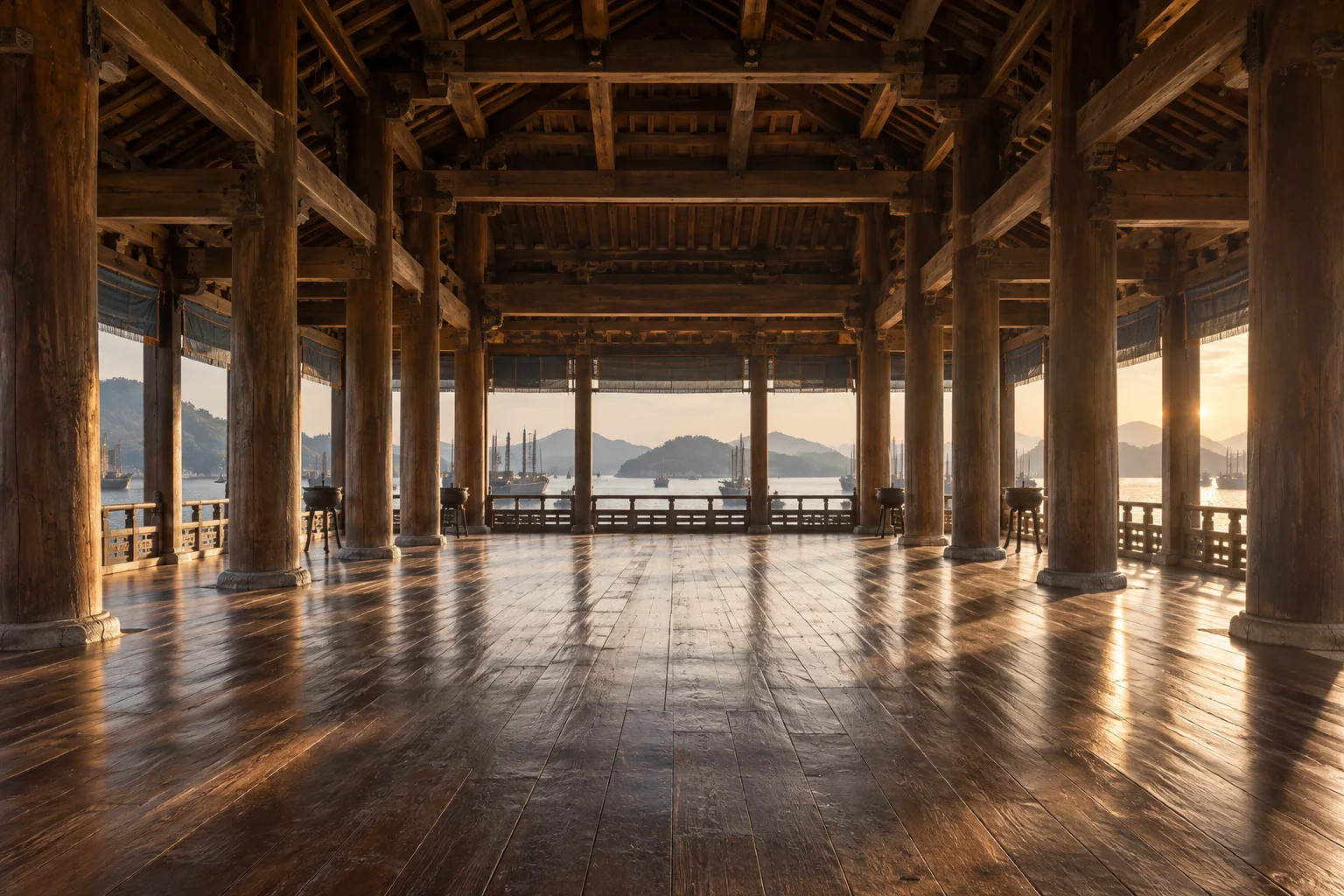
According to the national heritage portal, Sebyeonggwan Hall in Tongyeong is a National Treasure designated on 14 October 2002, located at 27 Sebyeong-ro, Munhwa-dong, Tongyeong-si, Gyeongsangnam-do, and dated to the early 17th century. The National Heritage digital service reports that a ridge-beam inscription found during dismantling and repair in 1963 records that construction began in January of the eulsa year (1605) and the ridge beam was raised on 14 July of that year. The building is a single-story timber hall with nine bays at the front, five at the side and a hip-and-gable roof, and is described as one of the largest buildings in Korea along with Gyeongbokgung's Gyeonghoeru and Yeosu's Jinnamgwan. Tongjeyeong Naval Headquarters, to which Sebyeonggwan Hall belonged, took its site at Duryongpo (today's Munhwa-dong, Tongyeong) in 1603 and lasted 292 years, but during the Japanese colonial period most buildings other than Sebyeonggwan Hall disappeared. That is why the broad wooden floor and the great roof before your eyes feel all the more precious.
2. Dongpirang Village: From Demolition Plan to Mural Village
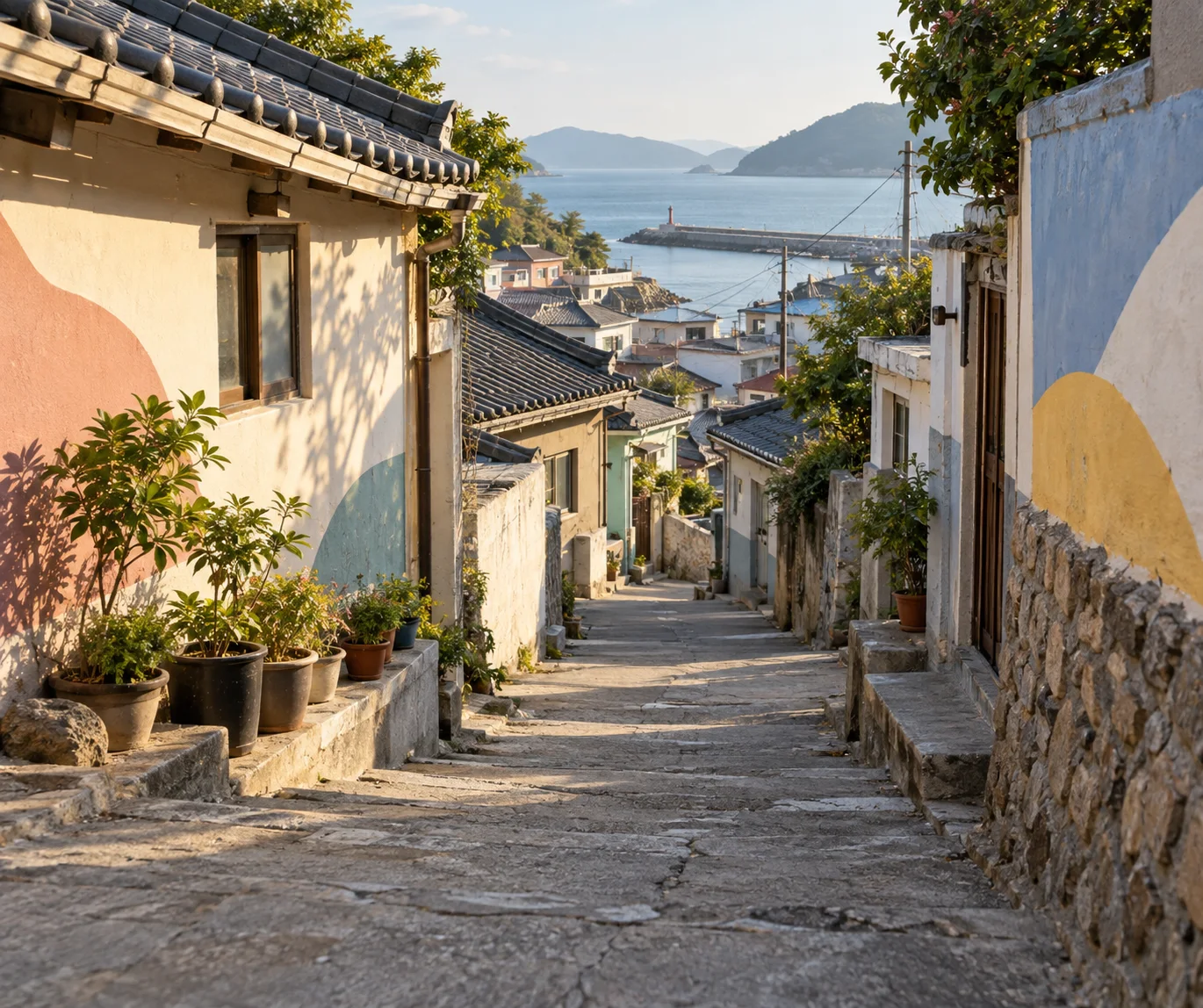
Dongpirang is a village below the eastern hill of Tongyeong Fortress, where people working near Tongyeong Jungang Market and Tongyeong harbor have lived for a long time. The city of Tongyeong planned to demolish the old houses, restore Dongporu and create a park, and in October 2007 the civic group Tongyeong Agenda 21 gathered people from across the country to paint, which changed the village's future. According to a newsletter of the Council of Governors of Korea, eighteen teams filled the walls, and as word spread, only the three houses at the very top that were needed for the Dongporu restoration were demolished and the rest were preserved. The name Dongpirang is explained as "east" combined with a Tongyeong word meaning cliff or slope.
3. Dongporu: Seeing Gangguan Port at the End of the Alley
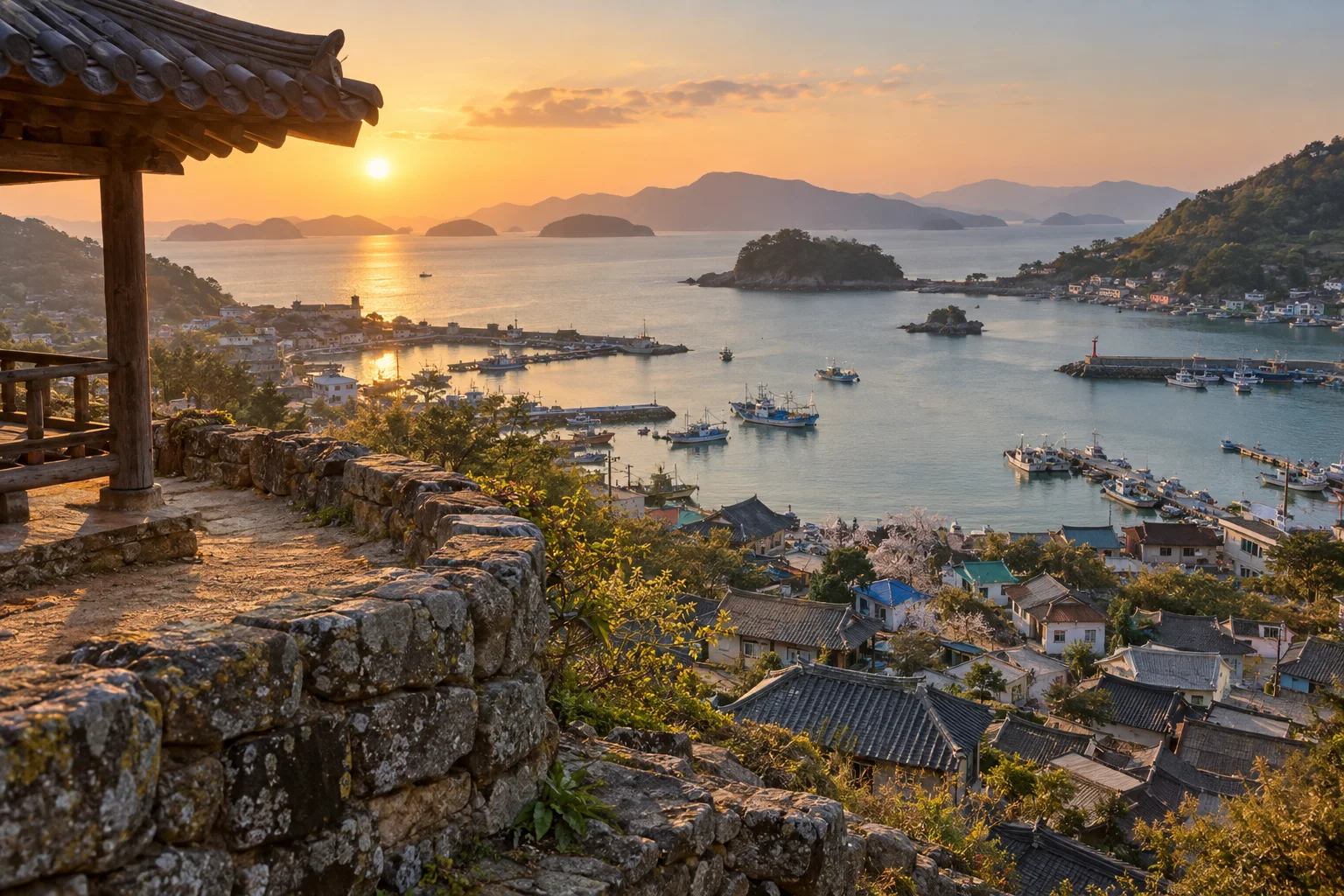
Dongporu stands at the highest point of the village, and from there Gangguan Port and the sea off Tongyeong are said to come into view at a glance. The 2018 newsletter reports more than 130 murals in the village, with walls and gates in many places adjoining homes where residents live. Because murals are sometimes repainted at the biennial mural festival, it is better to read the alleys of the day anew than to expect that the pictures you saw in books or photos remain as they were.
Before you go
The Korea Tourism Organization's barrier-free information indicates that the main entrance of Dongpirang has a step and that there is no wheelchair rental or elevator for people with disabilities. Since this is a route through hillside alleys, wear comfortable shoes and allow flexibility in your plans. Sebyeonggwan Hall is confirmed in the heritage record at 27 Sebyeong-ro, Tongyeong-si, with Tongyeong-si as its managing body. Visiting hours, fees, the mural festival and the current look of the alleys may differ from when the sources were written, so confirm them again just before your visit through the guidance of the operating body, such as the city of Tongyeong. This piece does not give travel distances or times, because no official source confirming them was found.
Closing
The broad floor of Sebyeonggwan Hall and the narrow alleys of Dongpirang differ completely in scale and character, yet both are the result of time that Tongyeong has long protected. One is a building put up by the state, the other a village kept alive by its citizens. After walking both in succession, you may begin to understand why the name Tongyeong is still in use today.
Questions before visiting
Does visiting Sebyeonggwan Hall mean seeing all of Tongjeyeong Naval Headquarters?
Sebyeonggwan Hall was a building within Tongjeyeong Naval Headquarters, not the entire headquarters. The command included grounds and multiple buildings, most of which disappeared during the Japanese colonial period except for the hall, so distinguish the surviving building from the wider military site.
Was Dongpirang Village newly built for its murals?
Dongpirang was already home to people working around the market and port; it was not built as a mural attraction. After the 2007 mural call, demolition was limited to three hilltop houses needed for restoring Dongporu and the rest were preserved, so treat the lanes as residents’ living space.
Can visitors still see the Dongpirang murals in old photographs?
The same murals are not guaranteed to remain. The 2018 source describes repainting during the biennial mural festival, so its figure of over 130 murals and older photographs are not a current inventory.