
From the Royal Fortress to the Market: A Walk Through Gongsanseong Fortress and Gongju Sanseong Market
To explore both a Baekje royal fortress and a traditional market in Gongju, combine the walls and palace site of Gongsanseong Fortress with Gongju Sanseong Market. The fortress offers its terrain and excavated traces, while the market, opened in 1937, adds a commercial space below the walls. Check market hours and the walking route between the two separately.
Introduction
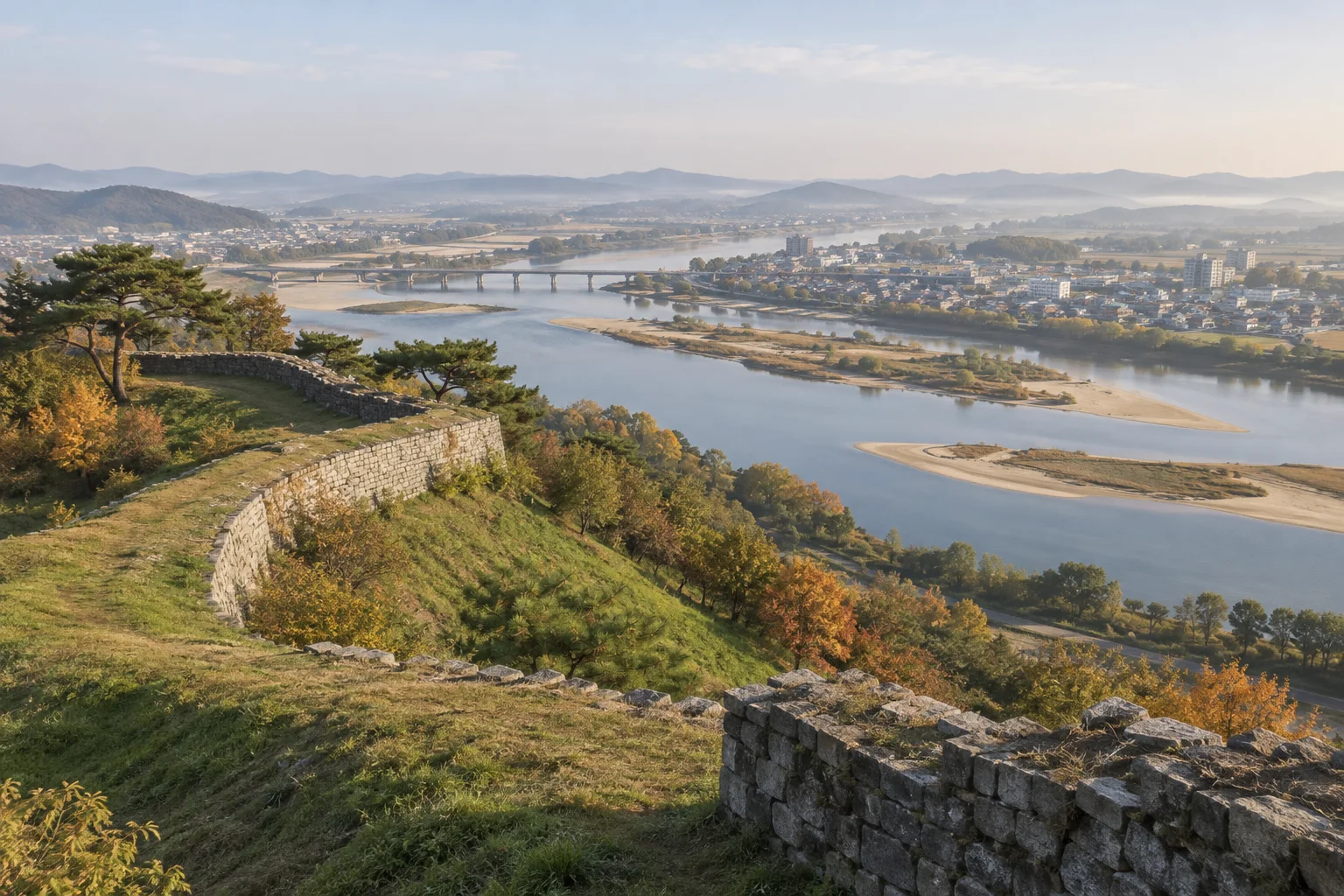
Gongju is the Ungjin that Baekje took as its new capital in 475 after losing Hanseong to a Goguryeo invasion. The Gongju city culture and tourism website describes the Ungjin capital period as running from 475 to 538 and says that the royal fortress of the time is today's Gongsanseong Fortress. In July 2015, Gongsanseong Fortress was inscribed on the UNESCO World Heritage List as one of eight sites in the Baekje Historic Areas, across Gongju, Buyeo and Iksan, including the Tomb of King Muryeong and Royal Tombs in Gongju.
Suggested route
1. The Geumseoru and Yeonmun Square area: look at the west gate’s position and the fortress layout. Confirm the actual entrance on the day. 2. The fortress walls and the Baekje palace site: gauge the center of the royal fortress on the flat ground before Ssangsujeong. 3. Gongju Sanseong Market: finish the walk at the traditional market below the walls.
1. The Geumseoru and Yeonmun Square area
Gongju's official blog introduces Geumseoru, the west gate among the fortress's four gates, as the gatehouse visitors seek out first. The post says that starting from Geumseoru makes walking the wall path very enjoyable. According to the same post, Yeonmun Square in front of the fortress has a 9.5-meter statue of King Muryeong, erected in 2021 to mark 50 years since the excavation of his tomb. This information comes from the official blog’s September 2022 post. The statue’s current condition, entry through Geumseoru and the connection to the wall path need separate confirmation. Use the west gate as a point of reference, not as a verified entrance route.
2. The fortress walls and the Baekje palace site
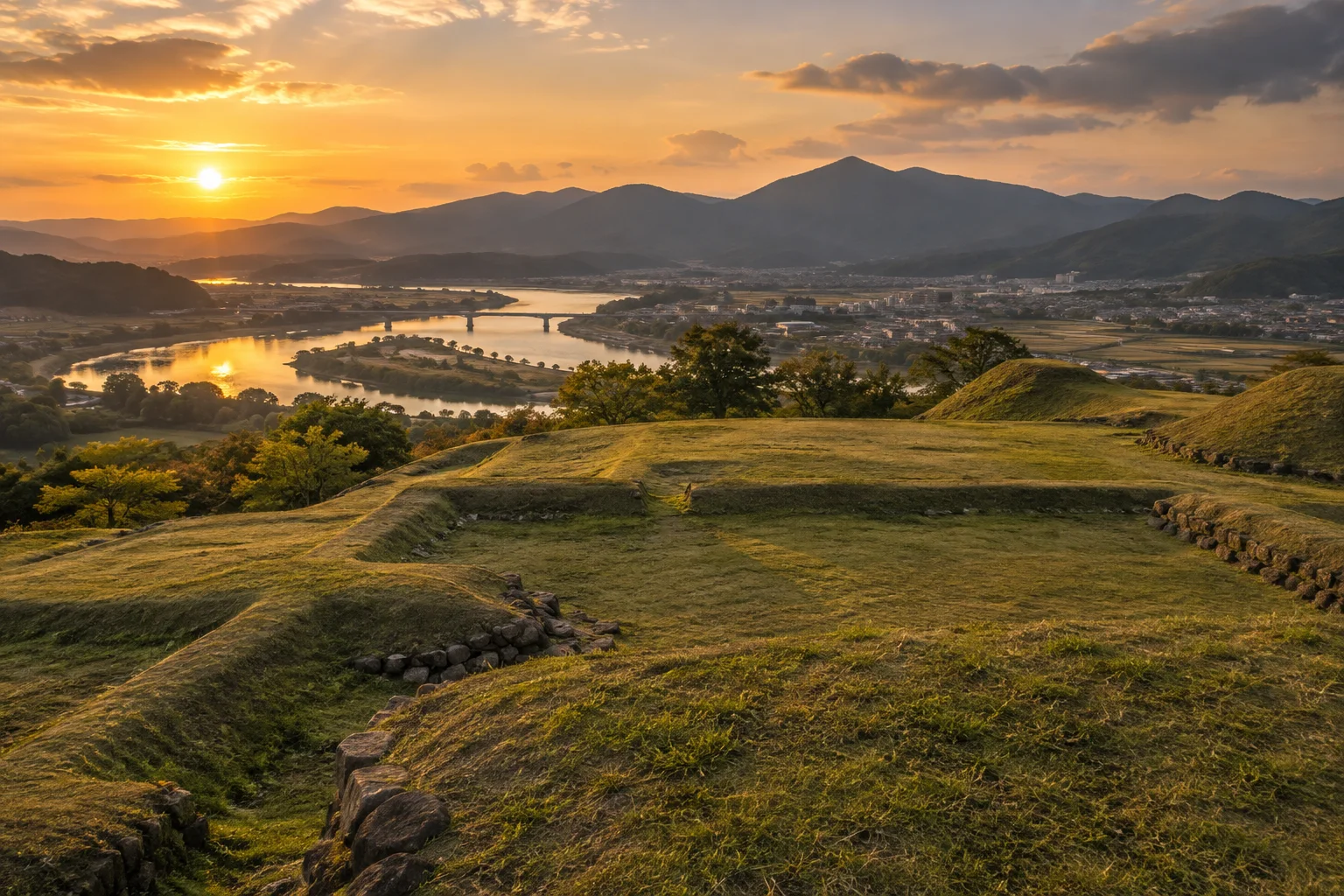
Gongsanseong Fortress, Historic Site No. 12, is a natural stronghold built using the Geumgang river to the north and the steep slopes of Gongsan hill. The walls total 2,660 meters, and most of the present walls were rebuilt in the Joseon period or later, so keep in mind as you walk that not every stone before you is from Baekje. The Baekje palace site lies on the flat ground before Ssangsujeong at the western summit inside the fortress, and from here the city of Gongju and the Tomb of King Muryeong and Royal Tombs in Gongju are said to be visible at a glance. Excavations confirmed buildings with wall-post construction, buildings with posts set in the ground, a pond and storage facilities such as a wooden storehouse. In a reservoir in the facilities area related to the palace, lacquered armor was found bearing an inscription in red of Jeonggwan year 19, that is, 645. The fortress's name changed from Ungjinseong of Baekje to Ungcheonseong of Unified Silla, Gongsanseong of Goryeo and Ssangsusanseong of Joseon.
3. Gongju Sanseong Market
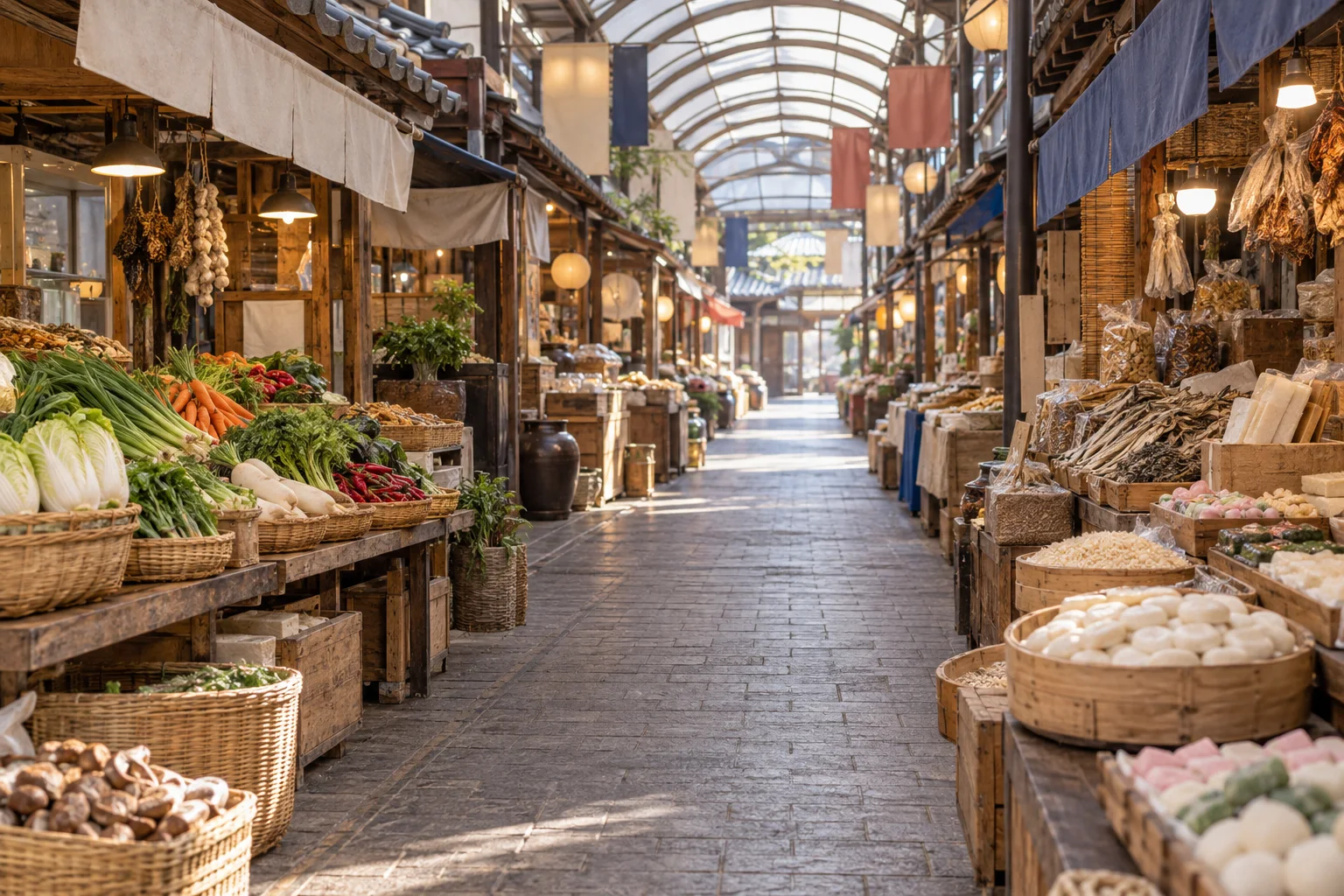
According to the Korea Tourism Organization listing, Gongju Sanseong Market is a market opened in 1937 that lies below the walls of Gongsanseong Fortress, the site of a Baekje palace, with historical and cultural tradition. It was selected among the 50 traditional markets worth visiting in 2011, and in 2012 it was chosen for the specialized market development project, and is described as a culture-and-tourism market linked to nearby historic and tourist sites. The listing also mentions Sorimaru, a merchant-run radio station, and events such as rice-cake sharing and a ssireum competition. Events may change from year to year. Walking down from the stone path of the fortress to the present-tense daily life of the market makes it clear that Gongju is not a city inside a museum.
Before you go
According to Gongju city guidance, Gongsanseong Fortress is open 9:00 to 18:00 from March to October and 9:00 to 17:00 from November to February, with entry until 30 minutes before closing. It is closed on 1 January and on the days of Lunar New Year and Chuseok, and parking is free. Admission is 3,000 won for adults, 2,000 won for teenagers and 1,000 won for children, and people aged 65 and over, people with disabilities and preschoolers, among others, enter free. Cultural heritage guided tours run on the hour from 9:00 to 16:00, and inquiries go to the tourist information center at 041-856-7700. The Korea Tourism Organization listing checked on 2026-10-15 reported a level difference at the market’s main entrance and no accessible toilet or wheelchair rental. Its update date was not verified, so this does not establish which facilities exist today. If you need mobility support, ask the market operator directly about entrances, toilets and wheelchair availability before visiting. The market's business hours and closing days could not be confirmed in this research, so look them up separately before you go. Check the entrance and walking route on a map for the day of your visit and adjust the order.
Closing
Focus the visit on the walls and the palace site before Ssangsujeong, then add Gongju Sanseong Market if its opening and the connecting route are confirmed. The figure of 2,660 meters describes the entire fortress wall, not this itinerary’s walking distance. Do not assume a full wall circuit or a half-day duration; choose the extent of your visit according to open sections and your mobility needs.
Questions before your visit
Are all the walls of Gongsanseong Fortress in Gongju from the Baekje period?
No: most of the present walls were rebuilt in the Joseon period or later, so distinguish the history of the royal fortress from the age of the walls you see. For Baekje remains, look beyond the walls to the palace site before Ssangsujeong and the explanations of excavated facilities.
What do Geumseoru and the palace site before Ssangsujeong show at Gongsanseong Fortress in Gongju?
Geumseoru is the west gate, while the flat ground before Ssangsujeong is the Baekje palace site. Focus on Geumseoru for the gate’s position and the fortress layout, or on the palace site for traces of life and facilities inside the royal fortress. Check the actual entrance and route on the day.
Why include Gongju Sanseong Market in a visit to Gongsanseong Fortress?
Pairing the royal fortress remains with the traditional market below the walls lets you compare two different spaces in Gongju. Opened in 1937, Gongju Sanseong Market is described by the Korea Tourism Organization as a culture-and-tourism market linked to nearby historic sites. Market hours and events on your visit date remain unconfirmed, so do not build the itinerary around a particular shop or event.