
Simni Bamboo Grove at Taehwagang: Choosing Shade or River Views
Focus on the bamboo and riverside paths around Simni Bamboo Grove in the Taehwa District, with Manhoejeong and Gwaneodae adding historical context. This does not cover the whole national garden. No fixed visiting order or duration is proposed. Check the entrances and actual path connections against guidance for your visit.
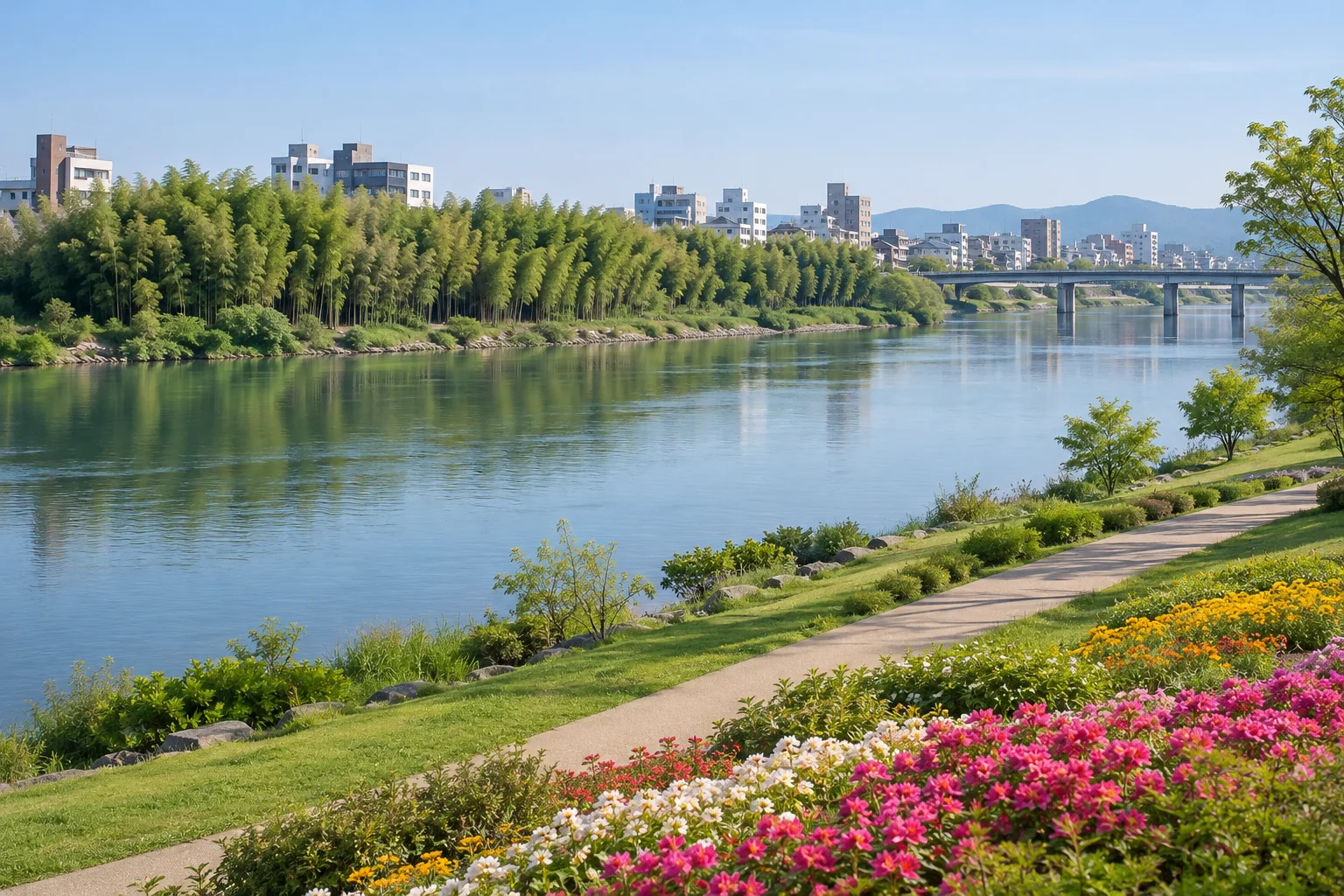
Ulsan is usually described as an industrial city, known for automobiles, shipbuilding and petrochemicals. A long bamboo grove running beside a river in the middle of such a city may come as a surprise, yet that is exactly the landscape Taehwagang National Garden offers. The Ulsan city website for the national garden introduces it as South Korea's second national garden, covering 835,452㎡ across Jung-gu and Nam-gu. This piece proposes a short, coherent route within the Taehwa District on the Jung-gu side, centered on Simni Bamboo Grove.
1. Taehwa District of Taehwagang National Garden: A Riverside the City Won Back
According to the national garden website, the garden is divided into the Taehwa District (Jung-gu area, 484,998㎡) and the Samho District (Nam-gu area, 350,454㎡). It is organized under six themes (ecology, bamboo, seasons, aquatic plants, participation and mugunghwa), with more than twenty themed gardens, and the bamboo garden is introduced as a contemplative forest path running along Simni Bamboo Grove. A Korea Tourism Organization travel article explains that the Taehwagang, once polluted by factory wastewater, was reborn as a living river after a restoration effort that began with the 2004 "Ecopolis Ulsan Declaration." Knowing this background, you can see the riverside greenery not as mere scenery but as a landscape that citizens took back.
2. Simni Bamboo Grove: A Green Tunnel Along the River
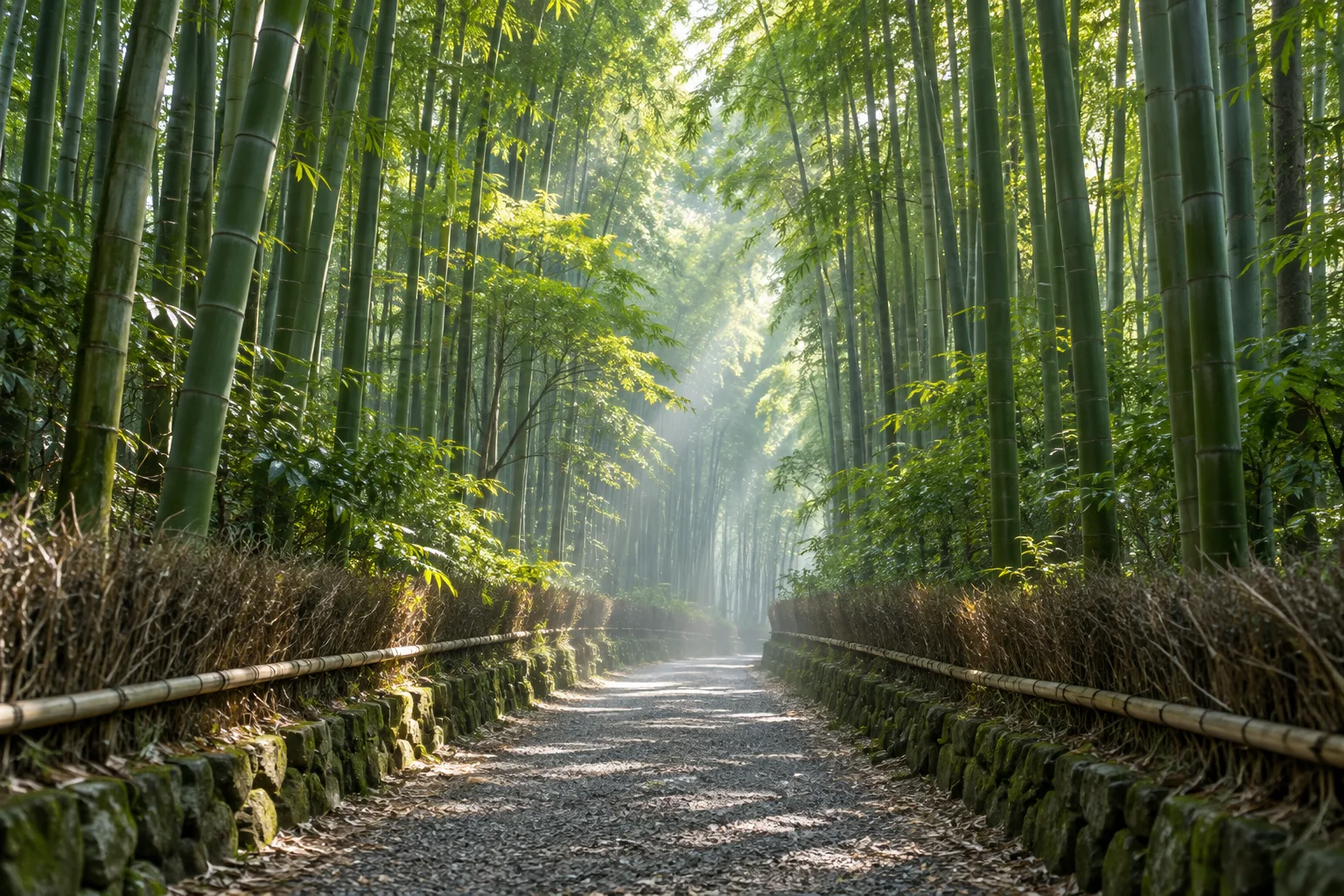
Simni Bamboo Grove stretches for ten ri, a traditional Korean measure of distance, along the Taehwagang. This natural garden makes use of bamboo that has grown wild here for many years. The Korea Tourism Organization's introduction singles out the river breeze moving through the bamboo and the whisper of the leaves as the character of this grove. What is worth noting is that the grove has both a path through the bamboo and a riverside path. This means you can alternate between the shade of the forest and the open view by the water. A night-lit section called "Milky Way Trail" is also described, but the article states that its information was last updated in March 2019, so whether the lights operate and at what hours should be checked separately before you go.
3. Manhoejeong and Gwaneodae: A Small Piece of History Beside the Bamboo
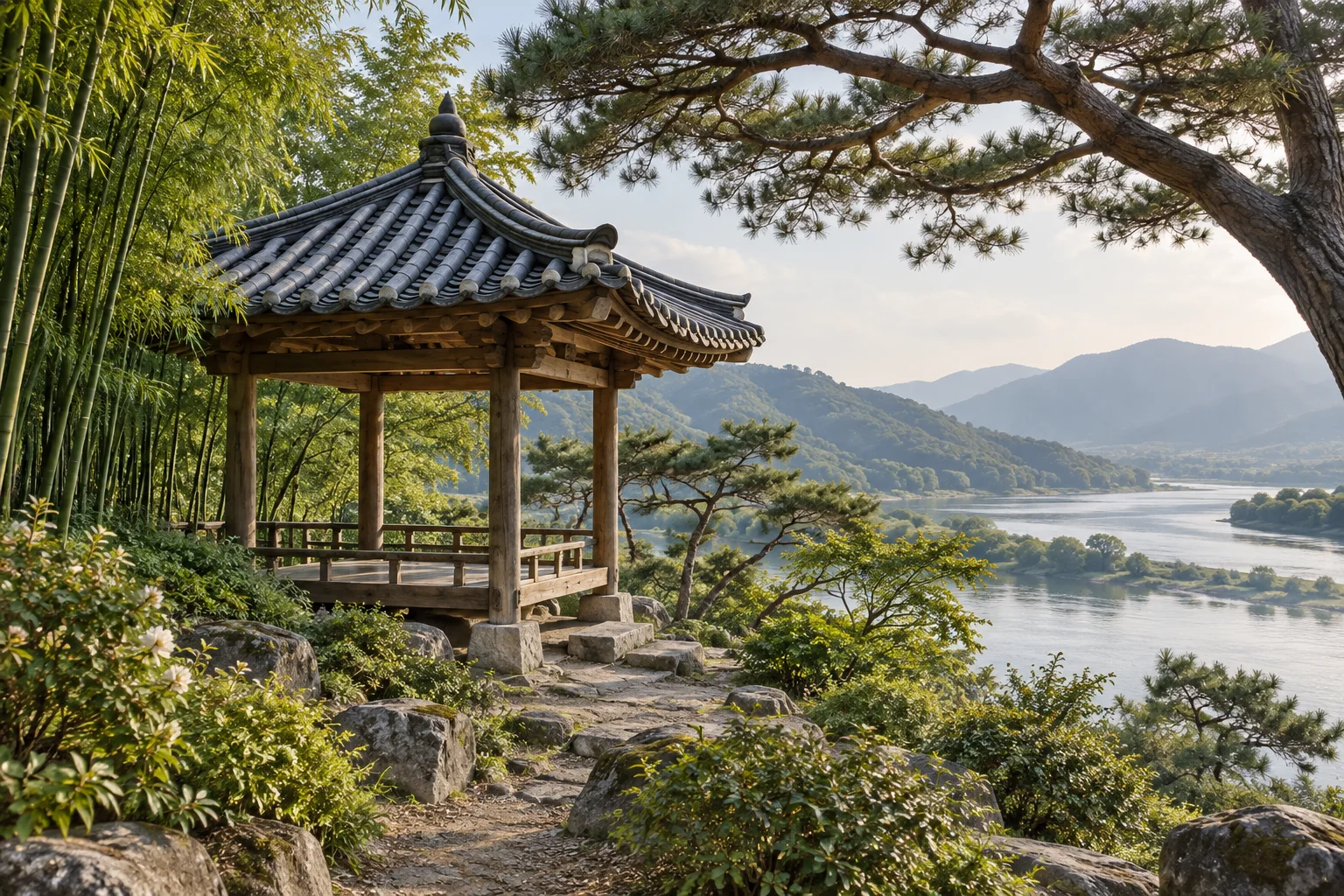
According to the Korea Tourism Organization article, Manhoejeong is a pavilion built by Bak Chwimun (1617–1690), who served as a magistrate in the mid-Joseon period; it burned down in the 1800s and was rebuilt in 2011. On the riverbank below it is a rock inscribed with the Chinese characters "觀魚臺" (Gwaneodae). The article adds, however, that the rock sits precariously close to the water, so visitors should be careful.
Before you go
The Ulsan national garden website has a separate guide page for the Taehwa District, and the department in charge is the Taehwagang National Garden Department. Before visiting, ask the garden management directly about accessible toilets, wheelchair and stroller rental, and steps at entrances. The Korea Tourism Organization accessibility listing alone does not establish which facilities are currently available. Events and facility operations can vary by season, so look at the guidance and event schedule on the national garden website just before your visit. This piece does not give travel distances, travel times or opening hours, because no official source confirming them was found.
Questions before your visit
Does a Simni Bamboo Grove walk cover all of Taehwagang National Garden?
No. The garden has Taehwa and Samho districts; this proposal concentrates on Taehwa around Simni Bamboo Grove.
How do the two paths differ?
Choose the bamboo path for forest shade and the riverside path for open views. Both are described in the source, allowing you to alternate according to the scenery you prefer.
Are Manhoejeong and Gwaneodae the same kind of sight?
Manhoejeong is a pavilion rebuilt in 2011, while Gwaneodae is an inscribed rock on the bank below. Distinguish the two, and take care near the rock because it is close to the water.