
Suwon’s palace, shrine and fortress: three different roles
To compare Suwon’s three heritage sites, look at royal stays and administration at Hwaseong Haenggung Palace, Jeongjo’s portrait and rituals at Hwaryeongjeon Shrine, and the city’s enclosing walls at Suwon Hwaseong Fortress. This route distinguishes their roles rather than treating the similarly named places as one palace.
Introduction: A City Built Out of Filial Devotion
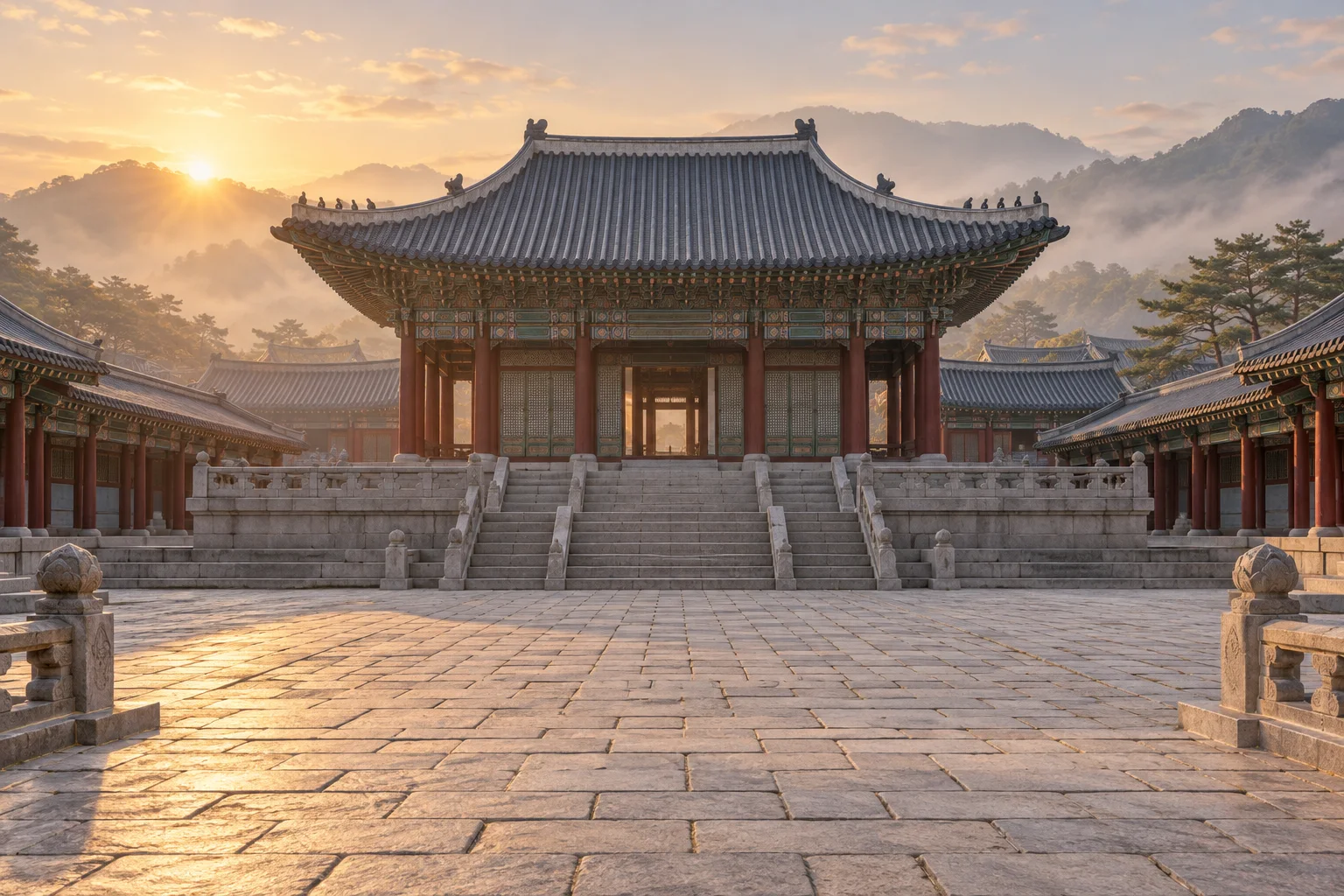
Suwon Hwaseong Fortress is a fortress completed in September 1796 by King Jeongjo, the 22nd king of Joseon, after he moved the tomb of Crown Prince Sado to Hwasan in Suwon. At that time the seat of the local government, which had been near Hwasan, was also moved to its present place at the foot of Paldalsan. What makes Suwon Hwaseong Fortress special is that the motive for building the walls lay less in military purpose than in a political and economic vision and filial devotion toward a parent.
This course proposes an order that starts at Hwaseong Haenggung Palace, where Jeongjo stayed, passes Hwaryeongjeon Shrine right beside it, and proceeds to the walls of Suwon Hwaseong Fortress. Linking spaces of different scales, a palace building, a hall enshrining a royal portrait, and a fortress wall surrounding a city, makes clear how a single vision was realized in many layers.
Suggested Route
- Hwaseong Haenggung Palace: the temporary palace where Jeongjo stayed on each royal tomb visit, which also served as the local government office of Suwon. - Hwaryeongjeon Shrine: the hall beside the temporary palace that enshrined Jeongjo's royal portrait. - Suwon Hwaseong Fortress: the fortress wall, with its combination of lowland and hillside fortifications, gate towers, Gongsimdon and Banghwasuryujeong.
This order is a proposal arranged along the historical context, not a verified walking itinerary. Check the entrances and walking route on a map on the day of your visit and adjust the order.
1. Hwaseong Haenggung Palace: A Temporary Palace of Scale and Formality, and the Time of Restoration
Hwaseong Haenggung Palace is Historic Site No. 478. It was built in 1789 for use as a government office when the tomb of Crown Prince Sado was moved and the seat of the Suwon local government was relocated to the foot of Paldalsan. It was also the temporary palace where the king stayed when he came down to Suwon. In 1795 Jeongjo held the 60th birthday banquet for his mother, Lady Hyegyeong of the Hong clan, here, and in 1796 it was completed on a scale of more than 600 kan in total. Jeongjo made 12 royal tomb visits over 11 years, from February 1790 to January 1800, and stayed at Hwaseong Haenggung Palace each time.
During the Japanese colonial period the palace was used as a hospital and a police station and was mostly destroyed, and today only Nangnamheon and Noraedang retain their original form. In the late 1980s local citizens formed a restoration promotion committee and campaigned for restoration; restoration work began in 1996, and work on the central area was finished in 2002. The recorded source describes excavation and restoration of Uhwagwan and Byeolju as ongoing from 2016. This is the source’s account, not confirmation that work is continuing on your visit date. The appearance at the time of construction remains in the pictures of 『Hwaseong Seongyeok Uigwe』 and 『Jeongni Uigwe』.
2. Hwaryeongjeon Shrine: The Hall Beside, Enshrining the Royal Portrait
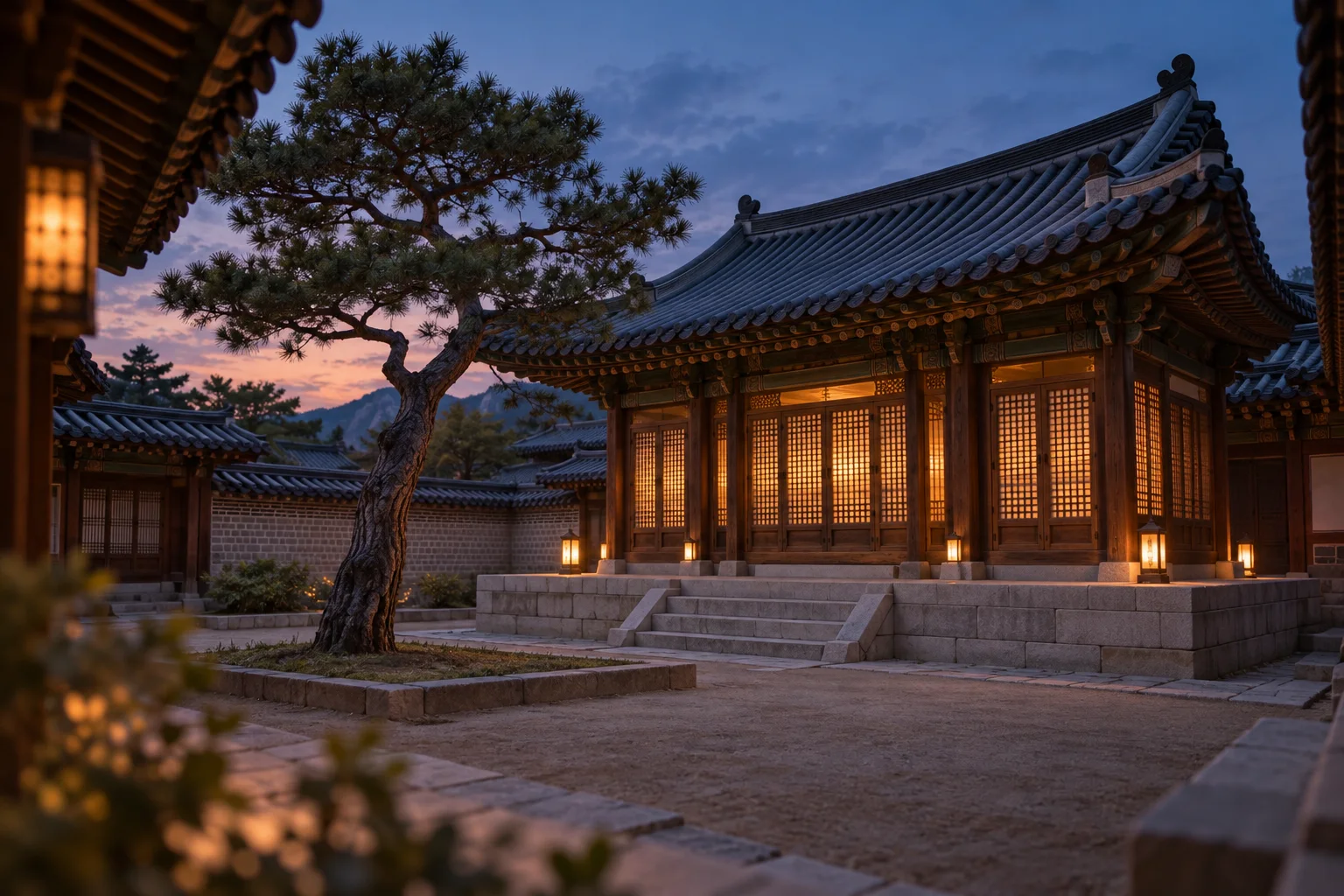
Hwaryeongjeon Shrine is Historic Site No. 115. It was built beside Hwaseong Haenggung Palace in 1801, the first year of King Sunjo, to enshrine Jeongjo's royal portrait and hold ritual ceremonies. According to the source, following an order to build a separate hall for the portrait after Jeongjo's death, it was completed in the short period of about two months.
Sunjo performed the Jakheonrye ritual at Hwaryeongjeon Shrine ten times during his reign, and Heonjong, Cheoljong and Gojong followed this each time they came down to Hwaseong. The main hall Unhangak, together with Iancheong and Bokdogak, was recognized for keeping its original form from the time of its founding and was designated a Treasure in 2019.
3. Suwon Hwaseong Fortress: The Fortress Becomes the Skeleton of the City
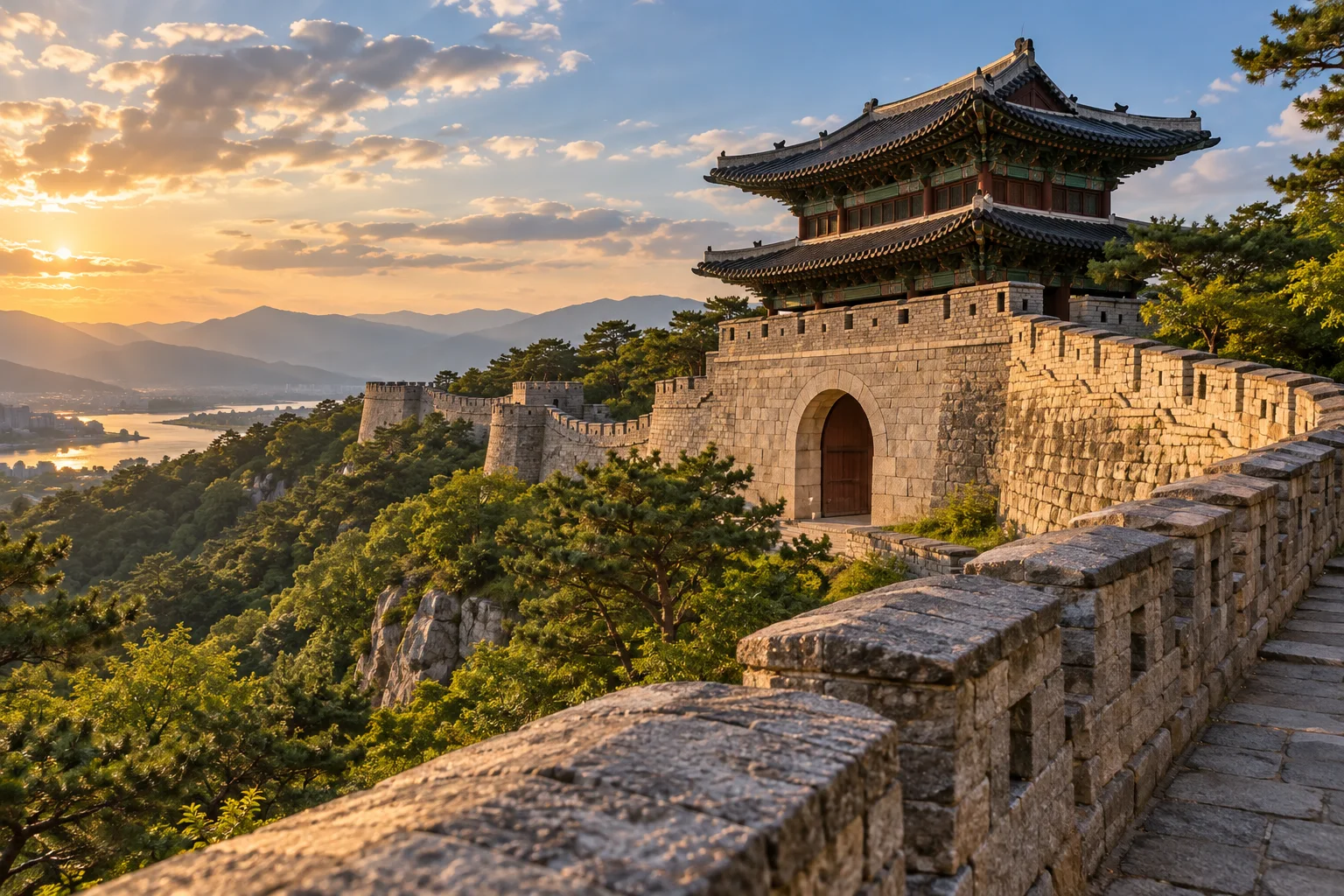
Suwon Hwaseong Fortress was begun in January 1794 and completed in September 1796. It was built using 『Seonghwa Juryak』, which Jeong Yak-yong compiled with reference to Eastern and Western technical books, as its guide, under the overall direction of Chae Je-gong and the command of Jo Sim-tae, and new machines such as the Geojunggi and Nongno were devised and used. The walls are introduced as 5,744 m in circumference and 130 ha in area, with the fortress extending across flat ground in the east and the slopes of Paldalsan in the west. It was inscribed as a UNESCO World Heritage Site in December 1997.
Paldalmun (Treasure No. 402), Hwaseomun (Treasure No. 403), Seobuk Gongsimdon (Treasure No. 1710) and Banghwasuryujeong (Treasure No. 1709) are listed as notable heritage structures. Also worth noting is the explanation that the Suwoncheon stream that once flowed through Buksumun (Hwahongmun) still flows today, and that the road network linking Paldalmun and Janganmun, and Hwaseong Haenggung Palace and Changnyongmun, still maintains the skeleton of the roads inside the city. You do not need to circle the whole wall at once. Start with a section close to Hwaseong Haenggung Palace and feel how this city sits on the structure of the fortress.
When Planning Your Visit
The Suwon Hwaseong Fortress menu on the Suwon Cultural Foundation site includes items such as visitor information, Hwaseong Haenggung Palace night opening, and cultural tourism commentary guidance. Admission conditions, operating hours and whether commentary reservations are available can change by season, so it is best to check the relevant guide page just before your visit. Because the circumference of the wall alone is 5,744 m, this is a large heritage site, and it is better to build a relaxed plan around the three places than to try to see every facility in a day. For inquiries, the Suwon Cultural Foundation gives 031-290-3600.
Closing
After considering the palace’s restoration history, compare it with the shrine’s construction date. Hwaryeongjeon Shrine was built in 1801, after Jeongjo’s death. Rather than treating all three sites as unchanged settings from his lifetime, distinguish royal accommodation, posthumous commemoration and later restoration. These differences make Suwon’s heritage easier to understand.
Questions before your visit
How do Hwaseong Haenggung Palace, Hwaryeongjeon Shrine and Suwon Hwaseong Fortress differ for visitors?
The palace housed the king during visits and served as Suwon’s government office, while the shrine enshrined Jeongjo’s portrait and hosted rituals. At the fortress, focus on the walls and street network surrounding and structuring the city rather than on individual halls.
Are all the buildings at Hwaseong Haenggung Palace unchanged from Jeongjo’s time?
No. The source identifies Nangnamheon and Noraedang as retaining their original form and describes restoration beginning in 1996, with the central area completed in 2002. Distinguish preserved buildings from restored spaces; that chronology alone does not establish the extent of restoration or access on your visit date.
Must I walk all of Suwon Hwaseong Fortress after visiting Hwaseong Haenggung Palace and Hwaryeongjeon Shrine?
No; choosing a section near the palace is another option. The walls have a circumference of 5,744 m and span flat ground to the east and Paldalsan to the west, so comparing the three sites and completing a circuit are different plans. This is a suggestion for choosing a section, not a verified walking route or timing estimate.